
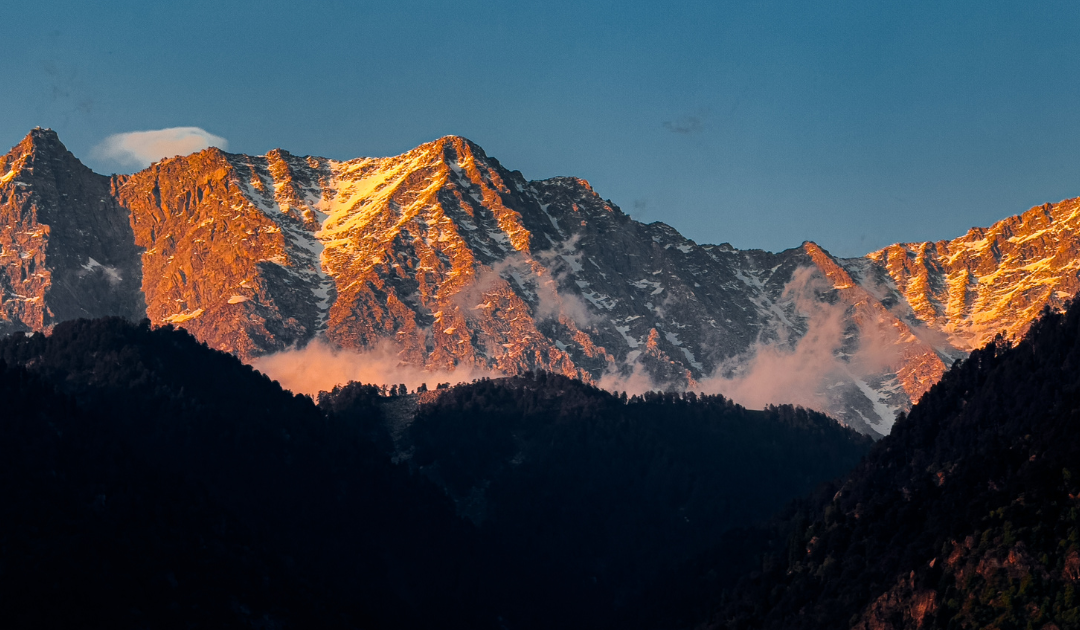
Born and brought up in Mumbai, studied in Bangalore, I was bit by a travel bug pretty early in life. My circumstances of life demanded me to study and get a job whereas I was deep into experimenting and exploring my desires. It won’t be right if I didn’t admit to losing lots of time and getting into pretty crazy situations on my quest of exploration. I never liked city life. I love staying busy but I don’t like living in the city. I wanted to find a perfect place to live. After travelling to many places in India, especially mountains, staying in Manali, Ladakh and Shimla, I decided to make Dharamkot in Dharamshala my home.
After working with great people in Dharamkot, I decided it was time for me to start something that I truly believed in. This marked the start of SHAPE. When I was trying to raise some money to support myself during the lean and mean periods of starting SHAPE, a gentleman asked me, “Why Dharamkot”? To answer that question, to myself and others, I am writing this article describing the reason for choosing Dharamkot for SHAPE experience.
Yoga, Meditation & Wellness in Dharamkot
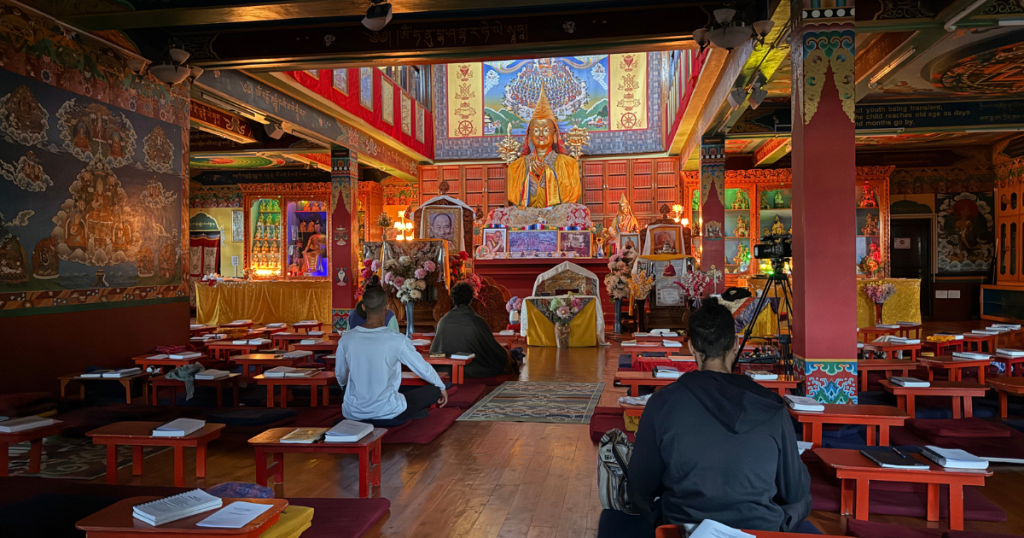
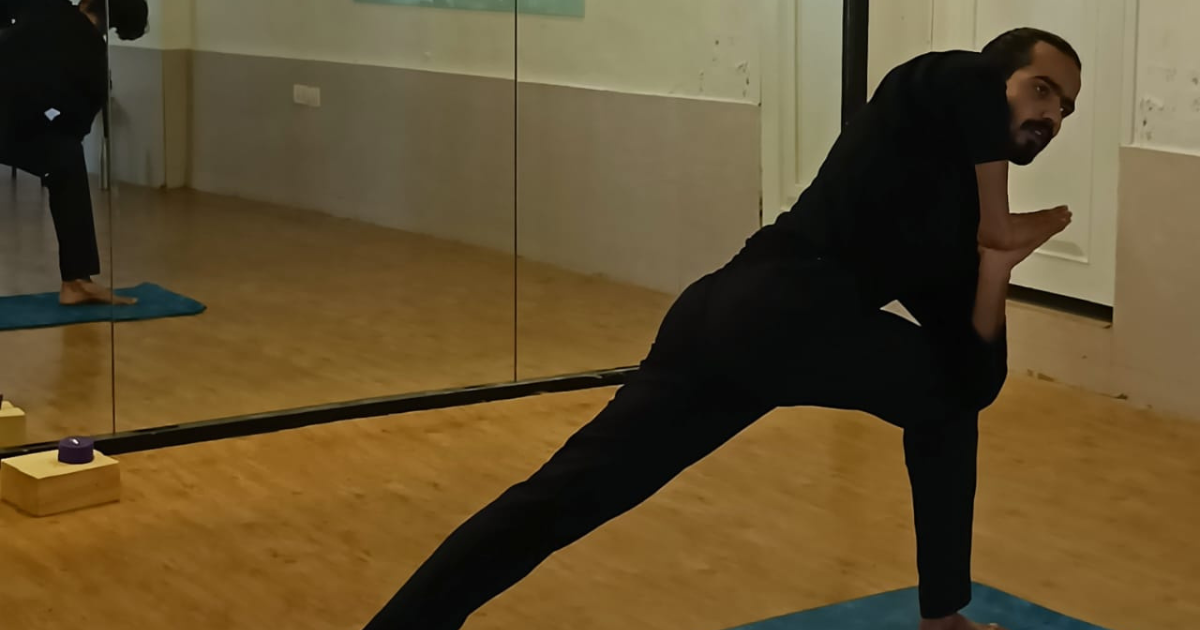
I came to Dharamshala in 2016 to do a yoga teacher training program in Mcleodganj with Kailash Tribal School of Yoga. I enjoyed Mcleodganj so much that I didn’t hesitate even once to return in 2017 when Yogi Sivadas invited me again to do Advanced Yoga teacher training. I am forever indebted to Yogi Sivadas for his teachings and wisdom. Laid back mountain town life with almost all facilities available makes this town pretty charming.
Like Kailash Tribal School of Yoga, Mcleodganj and Dharamkot are home to many reputed yoga institutes, and one of the most prominent being Himalayan Iyengar Yoga Centre.
Apart from yoga, meditation is the reason why Dharamkot can be considered the wellness centre of India. I agree that it is not appropriate to give such tags unless verified by several leading publications of the world. But, I would take a moment to justify my approach.
Being home to H.H. Dalai Lama, a vibrant Tibetan community and a large monastic population fosters a culture of peace to the town. Tushita Meditation Centre located at the entrance of the Dharamkot is a centre for the study and practice of Buddhism from the Tibetan Mahayana tradition. Tushita meditation centre sets the tone of the entire town by offering Daily Guided Meditations from 9-10 am IST (not on Sunday) and many courses such as Introduction to Buddhism and Intermediate & Advanced Courses.
Dharamkot is also home to the Dhamma Sikhara Vipassana Himachal Meditation Centre. Vipassana means to see things as they are. This meditation technique was introduced and taught by S.N. Goenka in the tradition of Sayagyi U Ba Khin. Dhamma Sikhara offers 10-Day Meditation Courses where meditation techniques are taught step-by-step.
Apart from well-established institutions, Dharmkot is a hub where talented yoga practitioners, breathwork facilitators and wellness experts come together to offer their unique services to the travelers and residents.
The town’s blend of yoga, meditation, spiritual energy, and wellness expertise creates the perfect environment for both physical transformation and mental clarity necessary for SHAPE experience.
Also Read: Altitude, Adaptation, and the Mind: What Happens When You Train in the Mountains
The Nature of Dharamkot
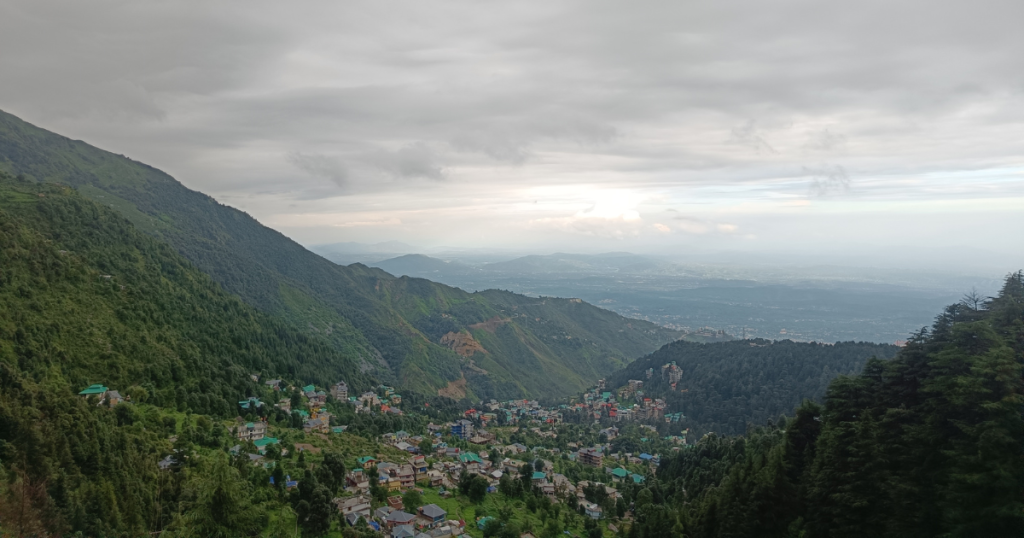
Dharamot altitude is 2100 m. Surrounded by majestic Dhauladhar mountains, it offers clear skies, lush green forest areas, and clean, crisp air. Dharamkot sits on the edge of subtropical broadleaf forest (1800 m) and temperate coniferous forest (2100 m) creating an overlap of both forest systems and resulting in a mix of flora and fauna species.
Dharamkot is a mountain village forested by Pine (Pinus roxburghii), Cedar Deodar (Cedrus deodara), Banj Oak (Quercus leucotrichophora), Rhododendron and Nepalese Alder Alnus nepalensis. There may be many other species I’m missing.
Daruharidra (Berberis aristata) and Indian Valerian (Valeriana jatamansi) are common medicinal herbs found in the forests of Dharamkot. Ferns, mosses and lichens thrive here due to the monsoon.
When it comes to wild-flowers, a variety of species of genus Primula and Gentiana can be found in the forests of Dharamkot. River anemone (Anemone rivularis), Dandelions, Asters and Buttercups can be found in summer.
Monkey and langurs are commonly found near the settlements but they are shy and avoid any human confrontation (just don’t look them in the eye). The thick forests of Dhauladhar ranges are home to Indian Leopard and Himalayan Black Bears but such sightings are rare.
Dharamkot in Dharamshala is a paradise for bird-watchers. Himalayan Bulbul, Black-headed Jay, Verditer Flycatcher, Blue Whistling Thrush, Great Barbet, Monal, Woodpeckers, Drongos, Warblers, and Treepies can be spotted here.
SwallowTail Butterflies, Himalayan Honeybee and Dragon flies are some common insects and pollinators in this region.
If you are an early riser, you’ll be greeted by the sweet sounds of different birds. It starts as early as 4:00 a.m. Dharamkot offers stunning and secluded places in the forests and on your terraces to practise morning yoga at sunrise. Sunsets are magical too. You can literally sit down and spend time tracing the movement of the sun as it goes down the horizon under the sea of warm orange and golden yellow skies.
The nature of Dharamkot and nearby regions is rich, lush and welcoming. It is pleasing to the eye, refreshing for the body and relaxing for the mind. Again, this supports the SHAPE ethos: peak performance in the mountains, close to nature where you are not alone but surrounded by forest and its beauty.
Running Trails and Mountain Hikes
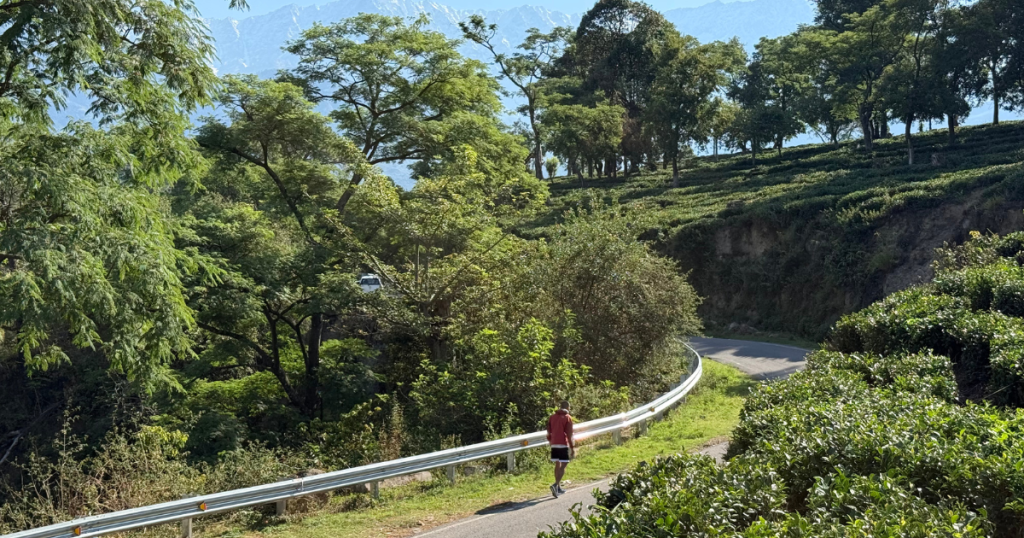
As a runner and a fitness enthusiast myself, I was always scouting for good running tracks. I am delighted to say that when my love for running peaked, I was not in Manali or Ladakh, but in Dharamkot.
Five stunning trails emerge from Dharamkot.
Trail 1: Running- Road (10k Classic)
Dharamkot to Dharamshala: A classic 10K route with plain roads and a slight decline, perfect for Sunday runs with the Dhauladhars in the backdrop. The track offers panoramic views of Kangra and is covered by trees on both sides. You can spot colourful flowers on your route that are very pleasing to the eyes. Whether it’s peak winter, spring, summer or monsoon, this track remains very supportive.
Trail 2: Running- Road (Half Marathon Route)
Dharamkot to Gaggal: This is a proper half marathon route (21 km) which gets even better after you cross Dharamshala. Quiet roads, a slight decline, the Dhauladhars in the backdrop. The route passes through tea gardens and small villages, a perfect setting to tune into your running playlist or that podcast you’ve been meaning to catch, while finally clocking that 21K.
Trail 3: Nature Hike- Gallu Waterfall
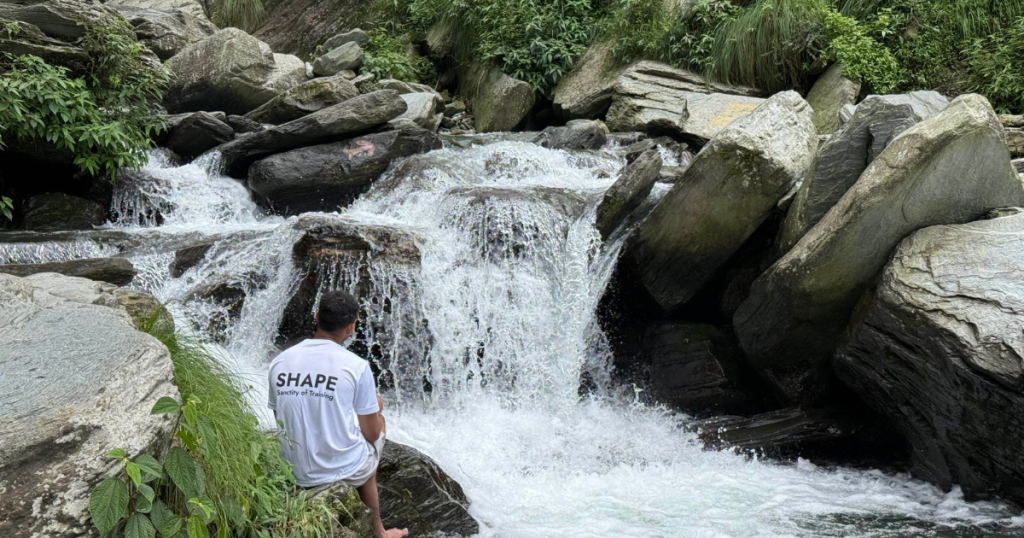
Dharamkot to Gallu Waterfall Hike: Dharamkot to Gallu Waterfall hike is a short and easy trail winding through pine forests and peaceful mountain paths. It’s perfect for beginners or those looking for a light nature walk. The waterfall is serene and uncrowded, making it a great spot to relax or meditate. The trail begins at Upper Dharamkot and takes about 90 minutes one way.
Trail 4: Nature Hike- Triund Hike
Dharamkot to Triund Hike: Dharamkot to Triund hike is one of the most popular treks in the Dharamshala region. Starting from Upper Dharamkot, the trail passes through Gallu Devi Temple and ascends steadily through oak, deodar, and rhododendron forests. It’s a moderately challenging 9 km trek that takes about 4 hours one way. At the top, you’re rewarded with stunning panoramic views of the Dhauladhar range and the Kangra valley below.
Trail 5: Flag Point
Dharamkot to Flag Point: One of the most sought-after walks or trail jogs is the route to Flag Point. You can start from Tushita and this 1.5 km stretch is absolutely stunning with deodar trees forming a wonderful canopy. Since the road is fairly rough you rarely encounter a vehicle or traffic. You can spot many tourists, travellers and locals walking towards the flag point as a part of their daily ritual. You have to walk towards Naddi village and stop when you see thousands of Tibetan prayer flags. From here you can spot the entire Kangra Valley. It’s a perfect sunset walk or jog if you’re staying in Dharamkot for a few days.
All the above five trails/hikes can be divided into shorter routes of 2K, 5K or any distance that one prefers.
These running and hiking trails are a major reason why Dharamkot was chosen as the training ground for SHAPE participants.
Also Read: 7 Day Peak-Performance in the Mountains
The Creative Side of Dharamkot
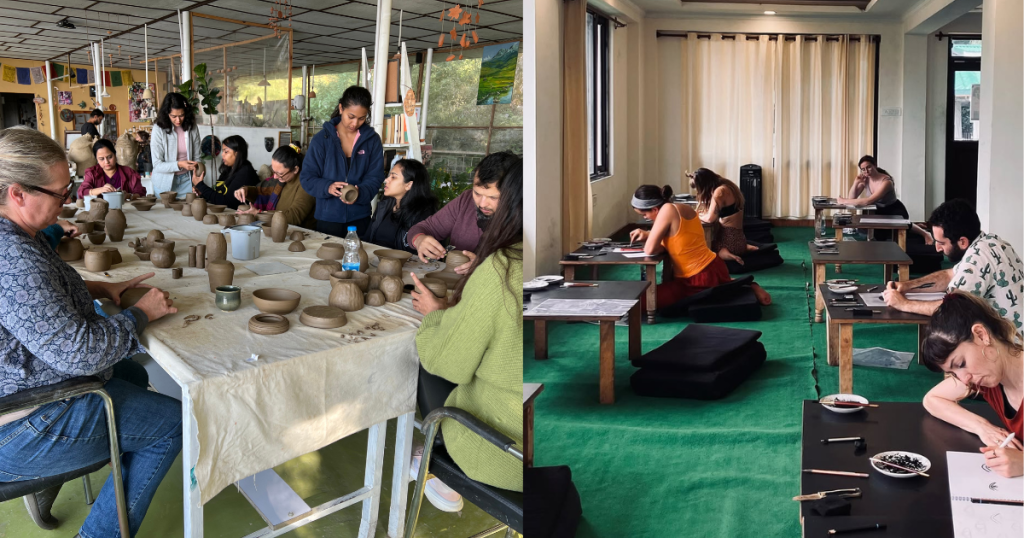
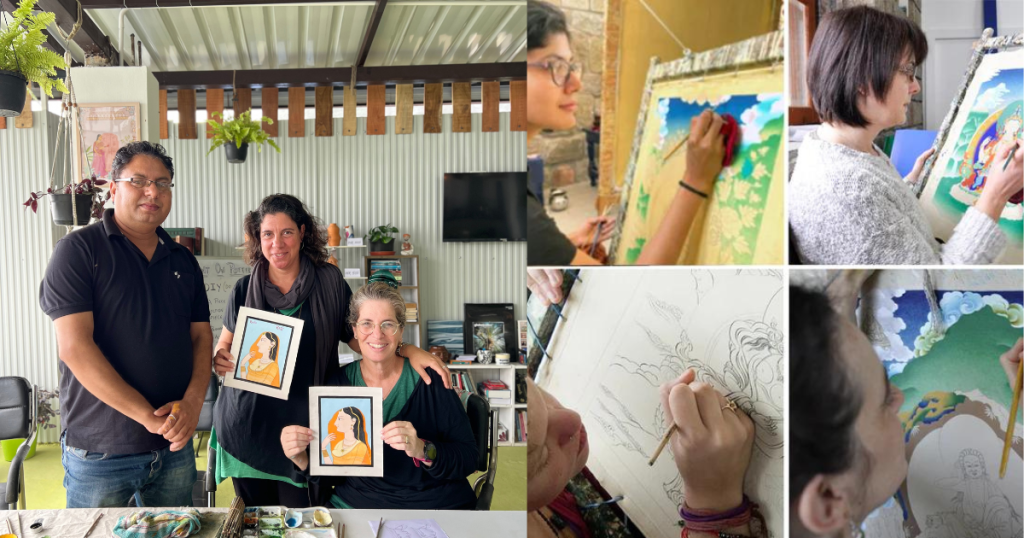
Dharamkot is a perfect destination in India where artists and creatives come to offer their best and seek inspiration in nature. If you look at the history of Dharamkot, you’ll find that it became famous among foreigners as a hippie village. As things transitioned, so did Dharamkot, and it has progressed a lot. Still, this small village near Dharamshala attracts hippies, travellers, artists, and creatives from all over the world.
Such a diverse crowd brings a plethora of engaging activities. We have performers, theatre actors, fire dancers, musicians, singers, painters and potters coming together in this small hamlet to practice and share.
You’ll be surprised to know that Dharamkot is home to two of India’s best creative studios: Dharamkot Studio for pottery-related activities and Science of Sketching for charcoal-based activities. There are many more people doing a variety of things but Dharamkot Studio and Science of Sketching are top-tier institutions.
Dharamkot is also rising slowly to become a centre of Kangra Painting and Thangka Painting. Master Locho and Dr. Sarika from Himalayan Art Museum are doing some stunning work in this regard.
Just 2km from Dharamkot, a newly launched Quiver community in Mcleodganj is a stunning creative space for learning, sharing and evolving through art. They host pottery and art workshops, along with interesting events, and also have a gallery space.
Dharamkot’s artistic leanings and creative atmosphere make it an ideal location for cognitive training for SHAPE participants.
Dharamkot Cafes
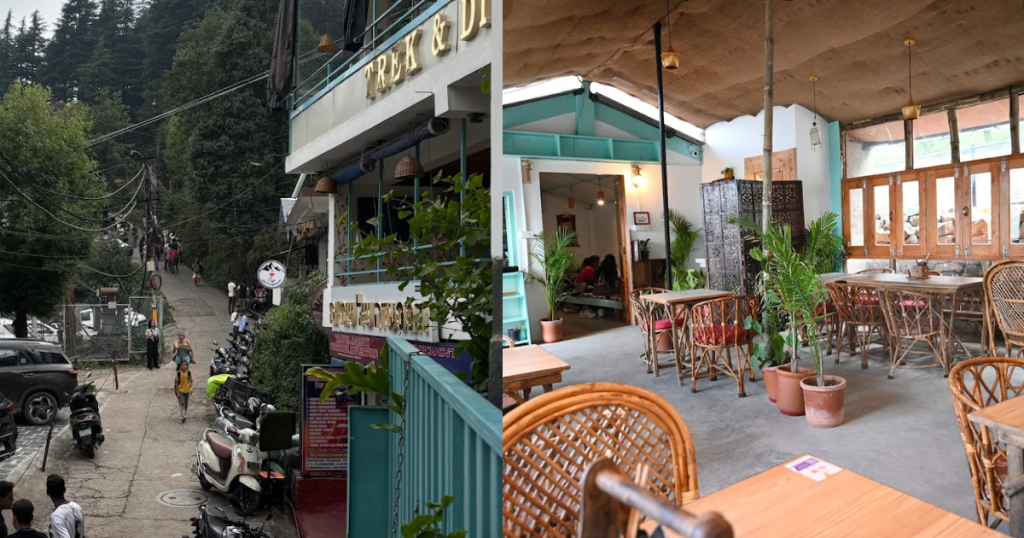
Though we follow strict nutritional adherence at SHAPE, it would be wrong not to acknowledge the good work being done in Dharamkot’s café culture.
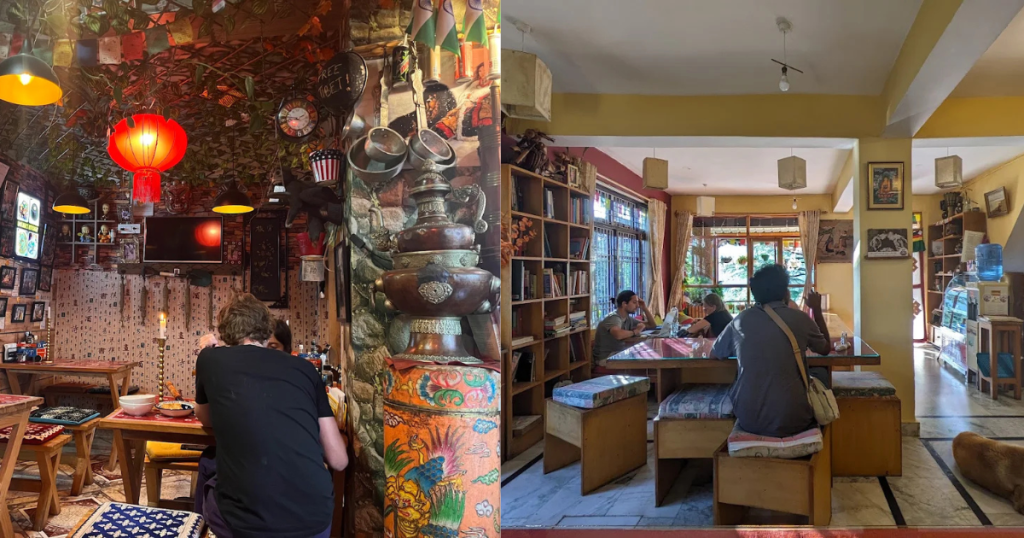
Dharamkot and McLeod Ganj, nestled in the heart of Himachal Pradesh’s Kangra Valley, are not just spiritual and trekking havens but also home to some of the most charming cafés in the region due to visitors from all over the world.
Dharamkot is home to a thriving café culture, blending the soul of the mountains with global flavors and warm hospitality.
At the heart of it is Trek and Dine, a longtime favorite for travelers, known for its Israeli-Indian fusion menu and laid-back vibe, perfect after a hike.
For those seeking healthier options, Bodhi Greens offers vibrant vegan fare, smoothie bowls, and clean eating in a peaceful setting.
Tucked away from the noise, Open Heart Café lives up to its name with soulful hot drinks and meals, friendly hosts, and a cozy, welcoming atmosphere.
On cooler days, The Hot Pot House is a warm haven, serving Asian-inspired broths, curries, and hearty bowls that comfort and satisfy.
For dessert lovers, Birdhouse Cakery is a hidden gem, famous for its carrot cake, cheesecakes, and artisanal coffee.
Meanwhile, 3 Trees Café brings the taste of South India to the Himalayas with crisp dosas, akki roti, and filter coffee in a quiet setting.
And no café trail in Dharamkot is complete without stopping at Moonlight Café, a pet-friendly, music-filled space known for its casual food, chill ambiance, and traveler camaraderie.
Together, these cafés create a flavorful, warm, and creative experience that defines the spirit of Dharamkot.
In McLeod Ganj, the café culture is a blend of Tibetan warmth, indie creativity, and mountain-town charm.
Indie Café is a rising favorite, known for its sleek interiors, strong coffee, and contemporary food with a Himachali twist, perfect for remote workers and artists alike.
Nick’s Italian Kitchen, a long-time classic, offers a serene, vegetarian-only menu (they serve eggs) with pastas, apple pies, and a tranquil rooftop view of the valley.
Pahari Café brings a taste of local Himachali cuisine in a clean, modern setting, a refreshing change for those seeking something beyond the usual continental fare.
Common Ground Café is my personal favorite for its interior and offering fusion Asian dishes and a space for dialogue and reflection.
And for no-fuss, authentic Tibetan comfort food, Dolma’s Kitchen continues to be a reliable and affordable choice, famous for its momos, thukpa, and simple, home-style meals served with a smile.
Dharamkot Weather
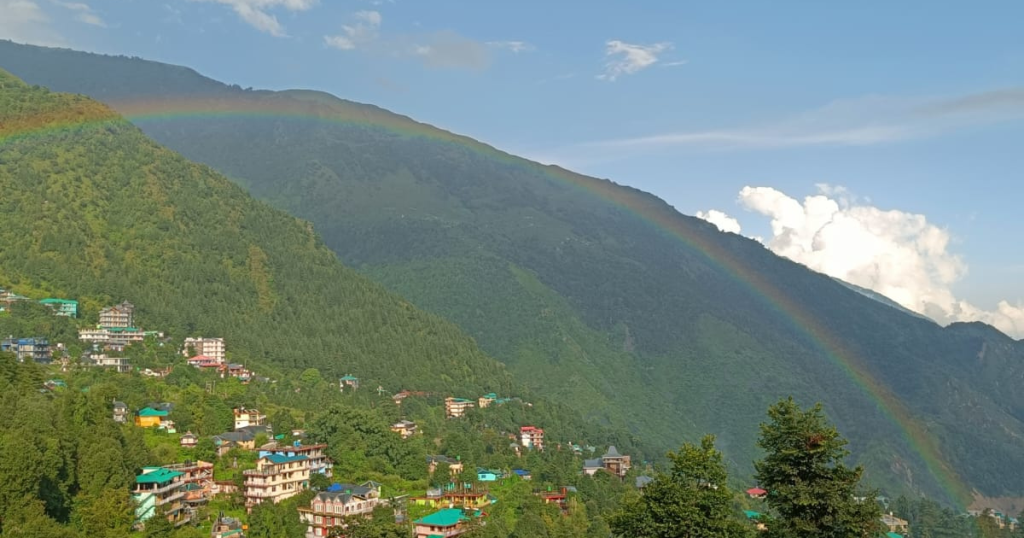
Dharamkot, a serene village nestled above McLeod Ganj in Himachal Pradesh, offers pleasant weather year-round, making it a favorite among trekkers, digital nomads, and spiritual seekers.
The weather in Dharamkot varies with the seasons but rarely turns extreme, offering a refreshing escape from the plains.
Summers (April to June) are mild, with daytime temperatures ranging between 18°C to 30°C, ideal for running, hiking to Triund, exploring Gallu Waterfall, or enjoying the creative spirit of Dharamkot.
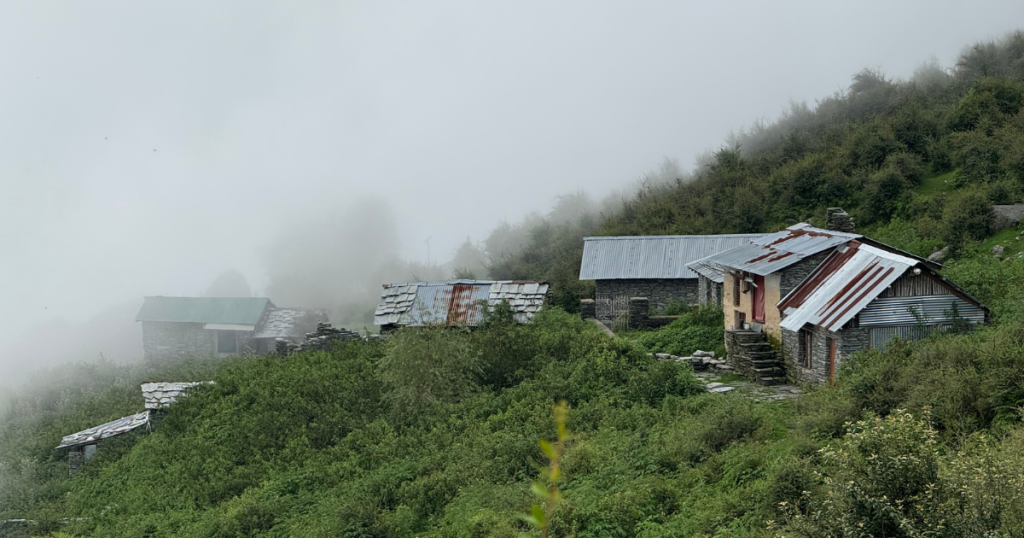
Monsoon (July to September): Many travelers mistakenly believe that Dharamkot becomes inaccessible during the monsoon, but this couldn’t be further from the truth. Nestled just above McLeod Ganj, Dharamkot near Dharamshala transforms into a dreamy, mist-laden haven between July and September. Clouds descend gently over the mountains, the forested trails are wrapped in fog, and the atmosphere feels straight out of a fairytale. Despite the rain, all major modes of transportation to Dharamkot remain functional including buses, taxis, and the Dharamshala-McLeod Ganj ropeway. Even air travel remains largely unaffected, with only occasional delays during extreme downpours, much like anywhere else in the world. Unlike higher-altitude destinations such as Manali, Dharamshala and Dharamkot rarely experience landslides, making the region a reliable and safe choice for monsoon travel. If you’re looking for solitude, poetic walks in the mist, and lush mountain greenery, the monsoon season might just be the perfect time to visit Dharamkot.
Autumn (October to November) is arguably the best time to visit Dharamkot, with clear skies, cool nights, and vibrant mountain views.
Winters (December to February) are chilly, with temperatures dropping to 2°C, and occasional snowfall dusting the upper hills, perfect for cozying up in cafés.
Knowing the best time to visit Dharamkot based on its weather can elevate your SHAPE experience. SHAPE programs are active throughout the year because we face and ace every situation. Pack accordingly, stay updated with the Dharamkot weather forecast, and get ready to enjoy one of Himachal’s most peaceful destinations in every season.
How to reach Dharamkot?
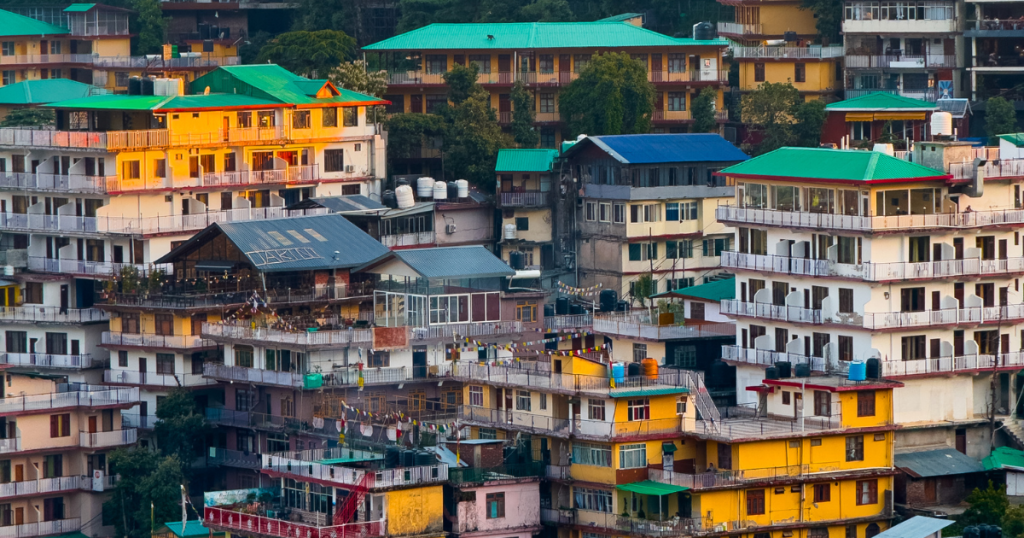
Dharamkot near Dharamshala is a serene Himalayan village known for its stunning views, spiritual energy, and connection to popular treks like Triund. It lies just above McLeod Ganj and is easily accessible through multiple modes of transport.
By Air: The nearest airport to Dharamkot is Gaggal Airport (DHM), also known as Dharamshala Airport, located around 21 km away. Daily flights from Delhi and Chandigarh connect travelers to the region. After landing, you can hire a cab or take a pre-booked taxi to reach McLeod Ganj, and from there, Dharamkot is just 2 km uphill – a short drive or pleasant walk.
By Train: The closest major railway station is Pathankot, situated around 90 km from Dharamkot. From Pathankot, you can take a cab or hop on a bus to Dharamshala or McLeod Ganj. The scenic journey offers glimpses of the lower Himalayas.
By Road: Dharamkot is accessible by road via Dharamshala and McLeod Ganj. Buses from Delhi, Chandigarh, and other North Indian cities frequently arrive at the Dharamshala ISBT. From Dharamshala, taxis and autos are available to McLeod Ganj. The Dharamkot to Dharamshala distance is approximately 8-9 km, making it a quick and scenic drive uphill.
By Gondola (Ropeway): One of the most exciting and eco-friendly ways to reach Dharamkot is by taking the Dharamshala-McLeod Ganj Ropeway. This modern gondola service provides panoramic views of the valley and reduces travel time significantly. Once you reach McLeod Ganj via ropeway, Dharamkot is only a 10-minute cab ride or 30-minute walk away.
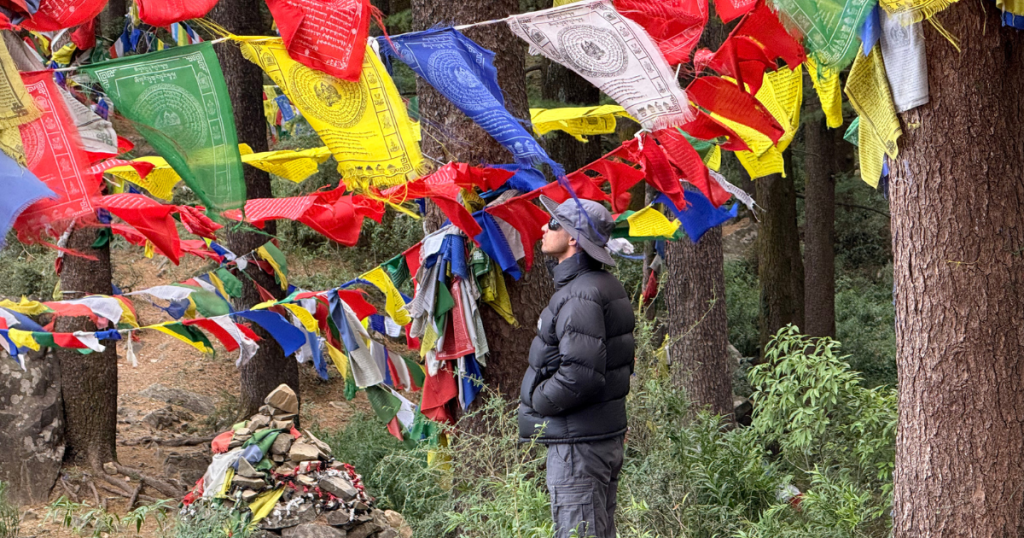
Dharamkot wasn’t a random pick for SHAPE. It felt right. The mix of quiet, creativity, wellness and honest mountain living just made sense for what I wanted to build. Over the years I’ve seen people come here to pause, explore and reset, and I’ve felt that myself. SHAPE is just one more layer added to what Dharamkot already offers, a space to become better at your own pace in your own way.